
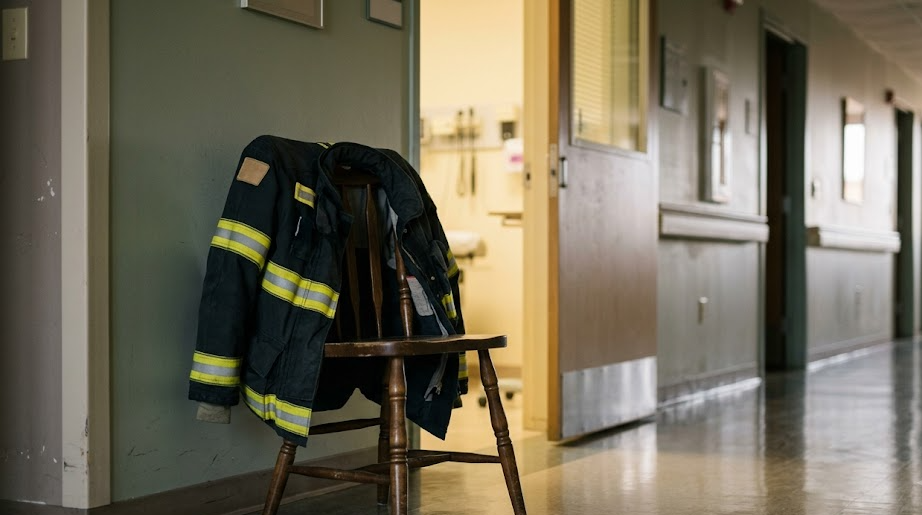
A general hospital has opened in Eumseong-gun, North Chungcheong Province. The National Fire Service Hospital. The opening ceremony was held there on the afternoon of the 11th, and it proceeded with a progress report, commemorative remarks and a congratulatory performance, followed by attendees touring the wards. This is the first time a hospital specializing in firefighters has been established in the country.
The scale is 19 medical departments and up to 302 beds. It provides outpatient and inpatient care, and it handles emergency medicine, health checkups and rehabilitation treatment. As specialized centers, it has a burn center, a mental health center, an integrated rehabilitation center and a health promotion center.
Why those four were selected is not hard to read if you picture the inside of a burning building that firefighters go in and out of.
When putting out fires, pulling people out and moving patients are repeated, the musculoskeletal system is damaged first. Burns and smoke inhalation are also injuries that recur in firefighting work. It has been a long time since post-traumatic stress disorder, PTSD, was placed on the list of firefighters' occupational illnesses, but there was no state medical institution that took charge of examining it.
President Lee Jae-myung also visited the opening ceremony that day. One of the places he stopped by was the integrated rehabilitation center. He received a report on the center's operation from Cho Yoon-soo, head of the integrated rehabilitation center.
Rehabilitation deals with the process of returning to one's original workplace after being injured. Determining whether a return to the field is possible and how far a person has recovered is a part that has always remained vague in the fire service organization.
This hospital does not stop at treating only firefighters. It also carries out the role of a regional hub medical institution responsible for severe, emergency and essential care in the central area of North Chungcheong Province. For residents around Eumseong, it also means that an emergency room has come closer.
The figure of 302 beds carries the qualifier "up to." How many beds are actually in operation at the time of opening and through what stages they will be increased are parts that will emerge as the hospital builds up its practice. Depending on how it fills its medical staff, the actual treatment capacity of the four centers will also differ.
Until now, the health of firefighters was closer to an area that each person took care of on their own. Which hospital to go to and what to say there in order to have the job and the symptoms looked at together was something the person had to explain. The National Fire Service Hospital handles burns caused by firefighting work and insomnia caused by firefighting work inside the same building.
With its opening, the National Fire Service Hospital leaves medical records. It is the first time that data on where and how firefighters are injured will accumulate at a state medical institution.