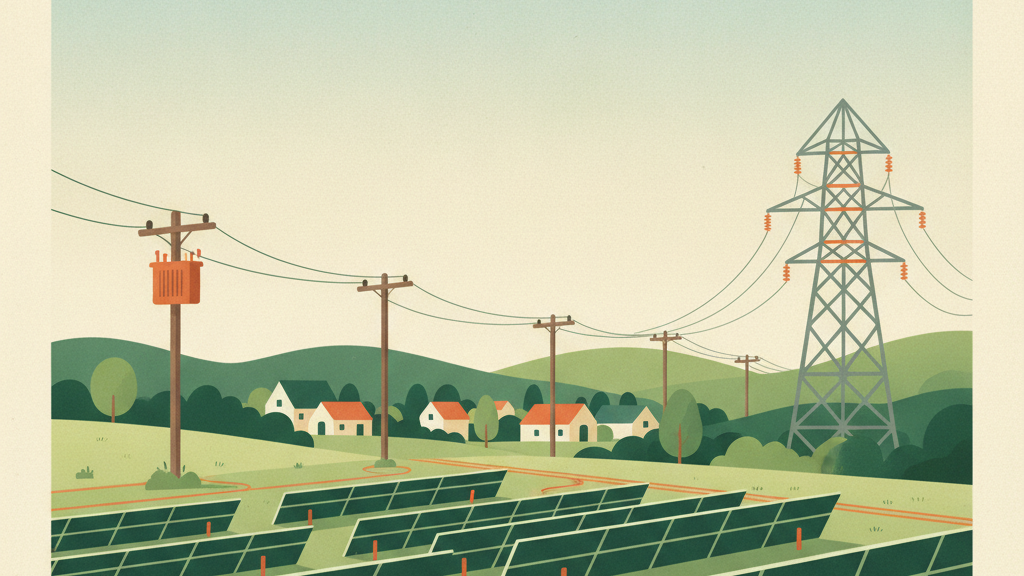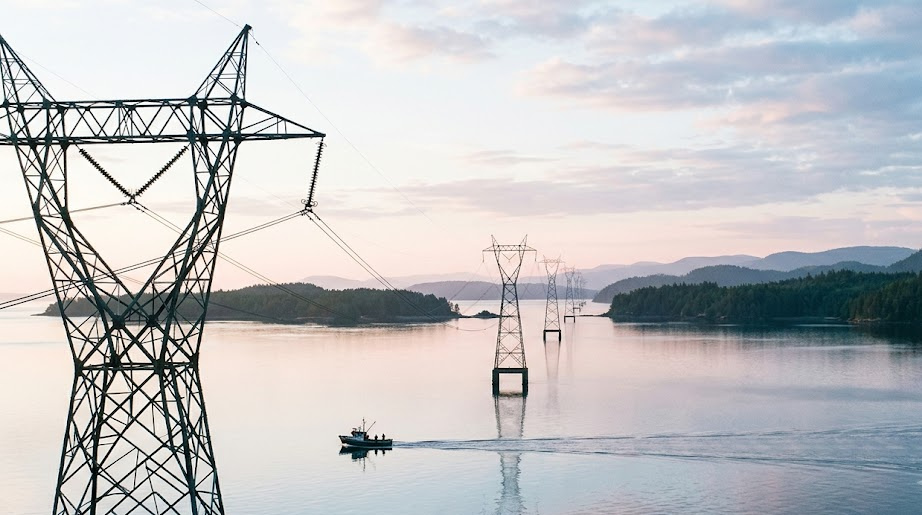
A 263-meter transmission tower has been erected over the sea. The 154 kV transmission line connecting Muan and Sinan in South Jeolla Province (Unnam-Sinan-Eupdong) was completed along its entire length and entered operation, according to an announcement on the 7th. Its total length is 52 km, it crosses between islands twenty-two times, and the longest sea crossing section was 2 km. The government expects the line to release about 190 MW of renewable energy capacity waiting for grid connection.
Two entirely different voices also broke out in the same week. At 3 p.m. on the 13th in Changwon, South Gyeongsang Province, some 600 people gathered for the "Expand public renewable energy! Guarantee full employment for power generation workers!
June 13 Just Transition Workers and Citizens March." And that day, at the Korea Press Center in Seoul, the Professors' Council Pursuing the Rationalization of Energy Policy held its 17th forum, "Energy Policy Is a Matter of Survival." One side called for going faster, and the other called for going only as far as can be managed.
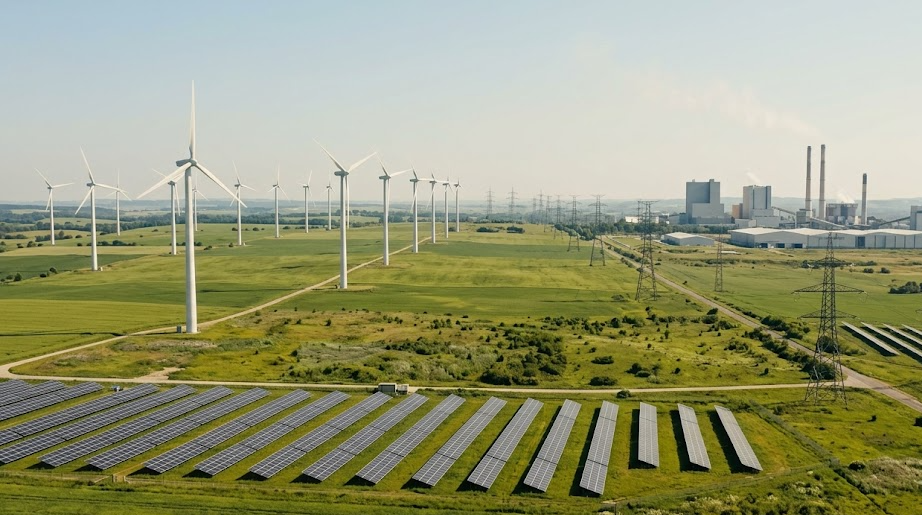
If the grid falls short, even plants that have been built cannot run. The number of renewable energy curtailments jumped from 2 in 2023 to 27 in 2024 and 82 in 2025. It remains unsettled whether these figures are nationwide or for Jeonnam, but the scale of the increase itself leaves little room for dispute.
At the forum, Moon Joo-hyun, a professor of energy engineering at Dankook University, pointed to the concentration in solar power. Eighty-seven percent of the target volume for renewable energy installations is concentrated in solar. He said domestic renewable generation capacity stood at 37.1 GW as of the end of 2025, and that reaching 100 GW would require installing 12.6-15.7 GW every year for the next 4-5 years. That is up to 3.4 times the past annual maximum of 4.6 GW.
There was also a point that support is needed to match the growth in deployment. Professor Moon cited the Dunkelflaute in Germany, when solar and wind sink at the same time, and the evening plunge in renewable output in California. Germany buys electricity from thermal and nuclear plants in neighboring countries, while Korea's grid is isolated like an island. Storage costs are not modest either, and he offered the view that even at the lowest price, more than 90 won per kWh could be added.
That does not mean solar's share is small. During daytime hours over the Lunar New Year holiday in February, solar supplied 23.7 GW, or 47.4% of total domestic demand, ahead of nuclear power's 15.9 GW. Professor Park Joo-heon said that for the world to reach carbon neutrality by 2050, 1.3 million tons of oil equivalent of fossil energy must be converted to carbon-free energy every day, and he proposed together a reduction target that is challenging yet achievable, the use of nuclear power, a gradual expansion of renewables and maintaining the share of LNG. Shim Hyung-jin, a professor of nuclear engineering at Seoul National University, argued that plans for new nuclear plants should be included in the Basic Plan for Electricity Supply and Demand.
The demands raised on the streets of Changwon pointed toward people. Participants called for guaranteed full employment for power generation workers, an expansion of public renewable energy, direct hiring of non-regular workers at KEPCO KPS, the formation of a council for a just transition away from coal, and the enactment and revision of four climate justice laws, including a public renewable energy act, an integrated Korea power generation corporation act, a just coal phase-out act and the Carbon Neutrality and Green Growth Act. The petition for a public renewable energy act was carried last year with around 50,000 people taking part. The march was co-hosted by the Public Renewable Energy Alliance, Climate Crisis Emergency Action, the Climate Justice Alliance, the National People's Action, the Labor Party, the Green Party, the Justice Party and the Progressive Party, and the Korean Confederation of Trade Unions.
The reason they gathered in Changwon lies in the schedule. Taean Unit 1 in South Chungcheong Province shut down at the end of last year, and the closure of Hadong Unit 1 in South Gyeongsang Province is set for this month. In South Gyeongsang, 10 of 14 coal plants will close by 2036. A phased shutdown plan for 2040 under the Carbon Neutrality Framework Act has been confirmed, so the time that remains becomes time to prepare the next jobs for the people working there before the plants reach the end of their life.
Whether the grid can be built in time, how the cost of storage will be shared, where the people who worked at coal plants will go. Lee Jae-sik, director general for power grid policy at the Ministry of Climate, Energy and Environment, said the ministry would build the grid on time and revise the rules to ease curtailment and expand renewables. Expansion is possible to the extent that answers are filled in for these three.
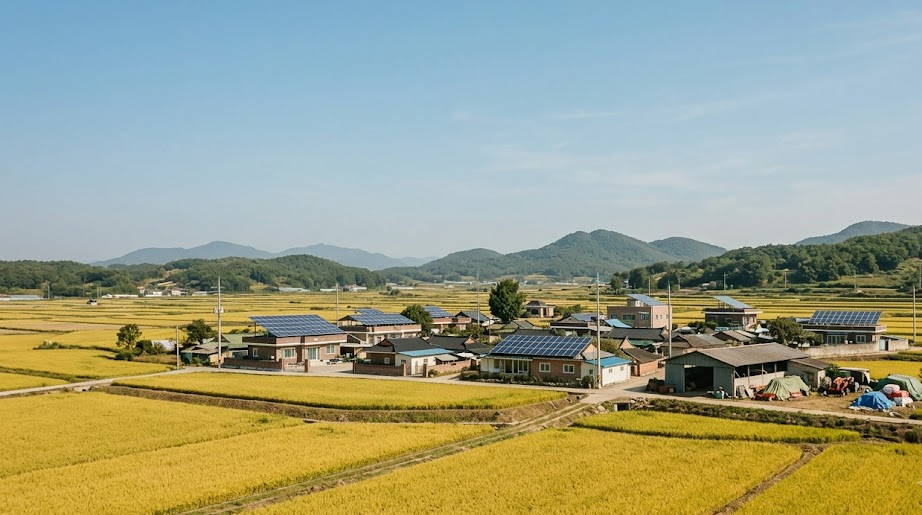
There are things readers can check as well. Grid expansion plans and local energy plans for the area where one lives can be viewed through local government notices and residents' briefings, and a period for submitting opinions is set as well. Briefings held in villages that transmission lines pass through usually take place on weekday afternoons, so few people attend.