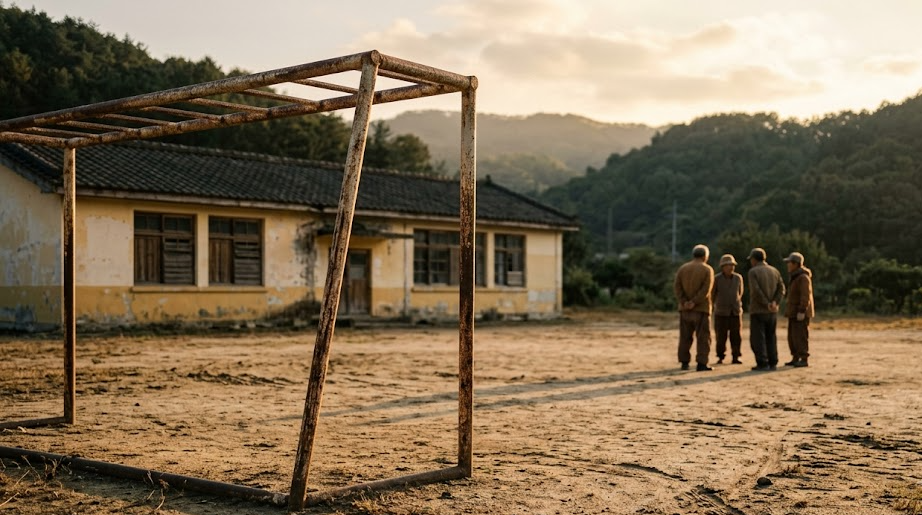
The Ministry of Education and the Ministry of the Interior and Safety opened on the 1st the first call for proposals for the "local government-education office joint cooperation project using closed schools." A total of 12 billion won in special grant tax and special grants will be provided to the roughly six projects selected. Local governments and education offices draw up a use plan together and apply by the end of July, and the results come out at the end of October after document and on-site review. It is a follow-up measure to the plan for promoting the use of closed schools that the two ministries released jointly in October 2025.
As the school-age population has declined, the number of schools closing in a year rose from 24 in 2021 to 49 in 2025. As of March 1, 2025, 376 public closed schools remained unused nationwide. Of those, 354 are concentrated in the eight cities and provinces that each hold 10 or more unused closed schools.
The call is divided according to who owns the school. For closed schools owned by local governments, the Ministry of the Interior and Safety takes charge and accepts projects responding to low birth rates, aging and local extinction, and for closed schools owned by education offices, the Ministry of Education takes charge and accepts projects linked to education and care, sports and culture, and local industry. It is an attempt to open up buildings that had been hard to touch because ownership was split, from two directions at once.
According to the National Data Office's population trends for March 2026, there were 25,200 births, up 19.4% from the same month a year earlier, but with 31,423 deaths in the same month, the natural increase fell by 6,224. The population of the Seoul metropolitan area first exceeded that of the non-metropolitan area in 2019, and the gap, which was 1,737 people that year, widened to 240,000 in 2020, 700,000 in 2023 and 870,000 in 2024. As of December 31, 2025, it exceeded one million.
Yet over the same period there were places that moved the other way. Government data show that, compared with December 2024, the population rose in 22 of the country's 89 declining-population areas as of March 2026. The competition ratio for non-metropolitan universities also rose 11.6%, from 5.9 to 1 for the 2025 academic year to 6.5 to 1 for the 2026 academic year. Over the same period, metropolitan-area universities moved from 12.5 to 1 to 12.8 to 1.
The resident registration population of the six cities and counties of Jecheon, Danyang, Goesan, Boeun, Okcheon and Yeongdong, all declining-population areas, stood at 316,340 at the end of March 2026, short of the target of maintaining 320,000 set in the first basic plan drawn up by North Chungcheong Province in 2023. Compared with the same month a year earlier, however, Okcheon rose by 2,041, Goesan by 1,522 and Boeun by 306. Yeongdong (-243), Jecheon (-433) and Danyang (-493) fell.
North Chungcheong Province included projects worth 1.24 trillion won over five years in its first basic plan and has put 38.4 billion won a year in local extinction response funds and other money into the six cities and counties. In October 2025 it drew up a comprehensive plan to invest an additional 850 billion won over four years through 2028, and in July that year it revised an ordinance to exempt acquisition tax when someone buys an empty house or opens a new medical institution in a declining-population area. The city of Gangneung also announced on the 31st of last month that it had been provisionally selected in a call for proposals for a collaboration project of the Ministry of SMEs and Startups. It is a project spending up to 2 billion won on upgrading the ceramics industry, with the final recipients to be decided in December.
The money has generally gone into buildings and facilities. That is why the government is shifting the local extinction response fund, worth about 1 trillion won a year, from a focus on building facilities to a focus on projects that raise local vitality. Saying it will redesign policy around the daily life of the people who live there, it is also pursuing the phased introduction of a multiple-address system and a registration system for the de facto population. In August 2025, a model ordinance for expanding the de facto population was sent to the 89 declining-population areas.
With the June 3 local elections ahead, pledges are pouring out as well. The Democratic Party of Korea has put forward a "five-pole, three-special-zone system" to break away from a single-pole structure centered on the metropolitan area, along with higher grant tax and local consumption tax rates and a basic income for farming and fishing villages. The People Power Party said it would raise the total project cost threshold for preliminary feasibility studies from 50 billion won to 100 billion won, fully exempt corporate tax for a set period when metropolitan-area companies move to non-metropolitan areas, and increase the number of spatial innovation districts from 16 to 100. Both parties included revitalizing regional airports and expanding the relocation of public institutions to the regions.
Who the 3,563 people added in Okcheon and Goesan are, and what brought them there, is not written on the evaluation sheet for this call. Local governments and education offices must submit applications by the end of July, and the results for the roughly six selections come out at the end of October.