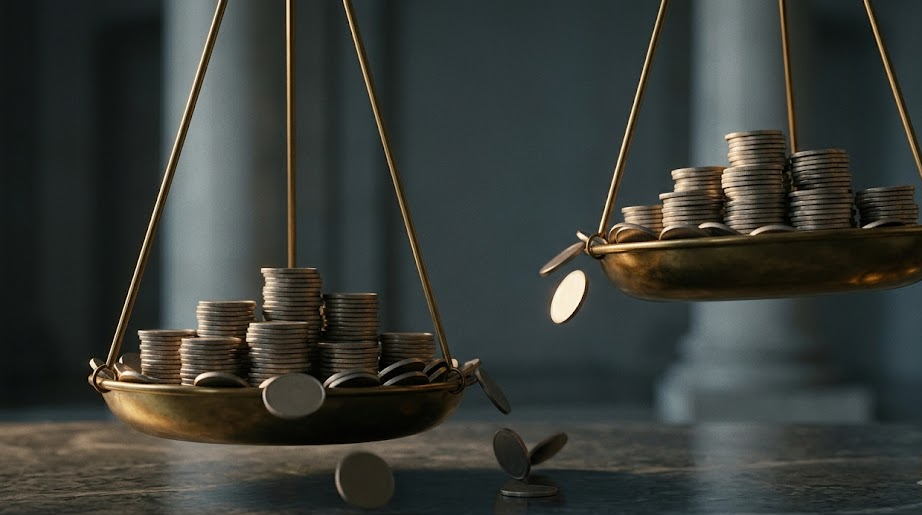
The debate over how to handle AI safety has spread to the election arena. Anthropic disclosed on the 12th, local time, that it had put $20 million, about 28.7 billion won, into Public First Action, a super PAC calling for tighter regulation. In the United States, a super PAC refers to a political funding organization that can raise and spend without limit, separately from a candidate's campaign. Companies building the same technology are now facing off with advertising money over how far regulation should be tightened.
Public First Action is calling for four things. Transparency requirements that would force AI models to explain to outsiders how they work, strong regulatory legislation at the federal level, export controls on AI semiconductors, and regulation of biological weapons and cyberattacks that use AI. What sets the organization apart is that while it presses hard for federal regulation, it opposes nullifying the rules that state governments have written on their own. It was founded jointly by Republicans and Democrats who favor AI regulation.
On the other side is Leading the Future, built around OpenAI and the venture capital firm Andreessen Horowitz (a16z). Its argument is to concentrate regulatory authority at the federal level and block individual legislation by state governments. OpenAI President Greg Brockman and his wife, along with Marc Andreessen and Ben Horowitz, each contributed $12.5 million. Cumulative fundraising is reported at $125 million (about 180 billion won), though no official disclosure specifying the date of the tally has been released.
Public First Action's fundraising target is $50 million to $75 million, in the range of 72 billion to 108 billion won. Advertisements are already running. The beneficiaries are Marsha Blackburn, a candidate for governor of Tennessee who has pushed legislation on children's online safety, and Sen. Pete Ricketts (R-Nebraska), who introduced a bill restricting exports of AI chips to China. How much will be spent on advertising, and which additional candidates will be supported, has not yet been disclosed.
Behind Anthropic's decision to open its wallet at this moment is a change in the company's size. On the same day, Anthropic announced that it had closed its Series G round and secured $30 billion (about 43 trillion won). The initial target was $10 billion, raised to $20 billion late last month, and the result went well beyond even that. Its valuation was set at $380 billion, or 545 trillion won.
On the list of backers, GIC and Coatue led the round, and Sequoia Capital, the Qatar Investment Authority, and traditional financial institutions such as BlackRock, Blackstone, Fidelity, Goldman Sachs, JPMorgan Chase and Morgan Stanley put down their names. The company said its annualized revenue grew from $100 million in January 2024 to $1 billion in January 2025 and $14 billion (about 20 trillion won) in January of this year. These are the company's own figures, and the basis for the calculation has not been verified outside the company. OpenAI's valuation is cited at around $500 billion.
That the side calling for tighter regulation is at the same time taking in investment in the trillions of won makes this confrontation hard to read as a simple contest of good and evil. Anthropic said flexible regulation is needed that controls risk while keeping the United States ahead in the AI race, and that it will not just watch from the sidelines as policy is made. The company blog wrote, without naming any particular firm, that enormous resources are flowing into political organizations opposed to AI safety efforts. Last year, White House AI chief David Sacks publicly criticized Anthropic for fueling a regulatory fever that harms the startup ecosystem.
Whether state government regulation survives or is eliminated does not end as a purely American matter. Korea is refining the scope of high-risk designations and transparency obligations ahead of the enforcement of the AI Basic Act, and depending on which logic wins votes in the United States, the attitude of global companies toward domestic regulation will also change. Nearly nine months remain until the November midterm elections, and the advertising money of the two super PACs will keep piling up until then.
In daily life, the outcome of this fight shows up quietly. Whether you can get an answer when you ask what data a chatbot was trained on, and whether you have the right to demand the reasoning when AI intervenes in decisions that shape your life, such as medical care and hiring, are decided here. Right now those rules are being refined by the people who make election advertisements. Whichever camp wins, the fact that the way rules are made has itself changed remains.