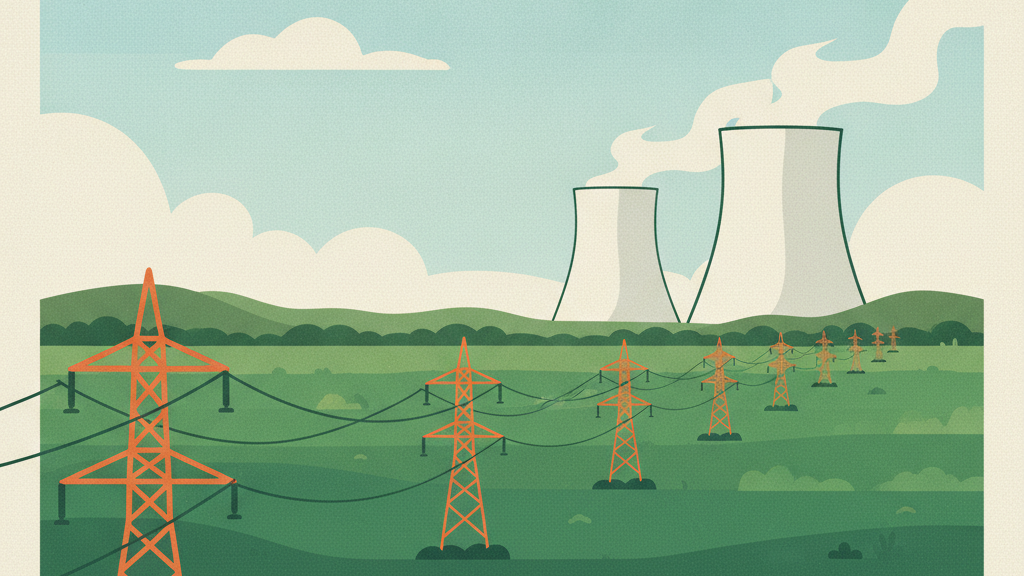
Nuclear power generation and power grid investment have been included in the $1 trillion green finance target set by JPMorgan Chase. The sum exceeds 1,340 trillion won. According to details released on October 14, 2026, the bank newly added nuclear power plants and power infrastructure to the scope of its sustainable finance support and allowed such investments to be counted toward its $1 trillion target.
The way the target is counted changes. The move keeps the target amount unchanged while expanding the types of projects that can be counted within it, so the scope of green finance, which had been read as carbon reduction, has widened to include the backbone networks that generate and transmit electricity. As JPMorgan, the largest bank in the United States, has revised its classification criteria, the impact may not stay within a single company.
Heather Zichal, head of JPMorgan's Center for Energy and Environment and of its sustainability strategy, explained the decision in an interview.
Artificial intelligence (AI) can be cited as the background to the expanded scope. As data centers multiply and power consumption grows, building new power plants and transmission and distribution networks requires large sums, and if these investments are recognized as green finance, the bank can count related loans and bond underwriting directly toward its target. Investment that stabilizes the power supply also ties into energy security. How persuasive this interpretation is depends on whether the bank directly cited AI power demand as grounds.
How much of the $1 trillion goes to nuclear power and the grid can only be estimated once the bank provides further explanation. The scale of the counted amount will also vary widely depending on whether it covers upgrades to large operating nuclear plants or is limited to new construction.
From the investors' side, comparisons between banks become blurred. Even for the same $1 trillion, a record that includes nuclear plants and transmission lines differs in nature from one centered on renewable energy. Rating agencies that compare banks' green finance records will have to look separately at itemized breakdowns instead of totals. Looking at totals alone creates an illusion.
The Korean financial sector also falls within the range of influence. As discussions continue over how far to extend the recognized scope of green finance under the K-Taxonomy, Korea's green classification system, the first case of one of the world's largest banks including nuclear power and the grid in its green finance record is likely to be cited as a benchmark. Whether Korean banks take the same path depends on financial authorities' standards and each bank's disclosure policy.
Going forward, sustainability reports issued by Korean financial companies will need to be checked for whether new nuclear power and grid items appear in their green finance performance tables. Whether JPMorgan's $1 trillion changes even the way performance is tallied in Korea will be revealed in those tables.