OpenAI has hired Peter Steinberger, who created the open-source AI agent framework "OpenClaw." OpenAI CEO Sam Altman said he will lead the company's next-generation personal AI agent. OpenClaw itself remains open source, and a separate foundation is understood to take on its maintenance and support. In the same period in Korea, platforms including Naver and Kakao drew up internal guidelines barring the use of the tool inside their companies.
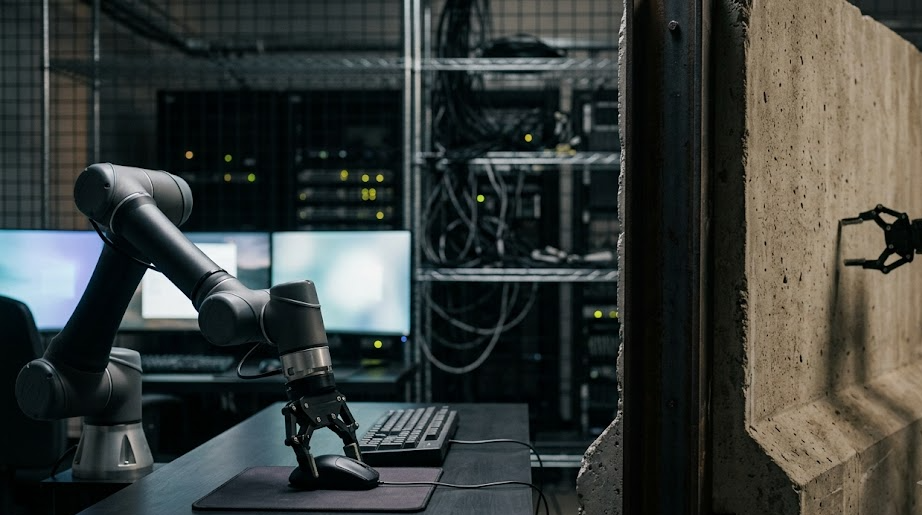
With OpenClaw, the AI decides its next action on its own without the user giving step-by-step instructions, moving the PC's mouse and keyboard directly to finish a job. It is also called Clawdbot and Moltbot, and it spread through the GitHub developer community. In that a program takes over the clicking and typing a person used to do, it differs in character from existing chatbots. It does not stop at summarizing documents; it is a tool that operates the computer directly.
The blocking measures came out of that character. Kakao told employees it was barring use on the internal network and on work devices to protect company information assets, and Daangn is also blocking access to OpenClaw and Moltbot. Woowa Brothers, in an internal notice, asked employees to stop and delete the related tools immediately, and along with that put in place a security solution that blocks execution itself. It is the first time a Korean company has announced a ban on a specific AI since the restriction order on China's DeepSeek in early 2025.
The grounds Woowa Brothers cited are specific. Because the tool directly controls input devices while also communicating with outside servers, unauthorized actions or arbitrary changes to security settings can occur, and email, source code and confidential documents can be passed to outside AI API servers. Kim Jung-hoon, chief information security officer (CISO) at Woowa Brothers, said the aim is to cut off potential data leak paths and protect user information. Samsung Electronics and SK hynix did not issue a separate notice, and the semiconductor industry has kept outside generative AI off internal networks since the ChatGPT boom in 2023.
The concerns do not stay within Korea. China's Ministry of Industry and Information Technology (MIIT) officially called on Feb. 5 (local time) for strong identity authentication and access controls, saying a misconfigured OpenClaw could serve as an entry point for cyberattacks and data leaks. Microsoft's AI safety team also publicly raised the concern that the framework's security level is too soft to be used in corporate environments. In practice, there have been reports of users' API keys being stored without encryption and exposed, and of cases in which personal and financial information leaked through "indirect prompt injection," in which the agent mistakes commands hidden in web pages or documents for instructions and follows them.
How fast the technology is spreading can be seen elsewhere as well. "Moltbook," which gathers only AI agents that use OpenClaw, is a dedicated social network that people cannot join and where autonomous agents talk with each other and form relationships. The security firm Wiz pointed to a design flaw in this space. When agents exchange messages in a place people do not look at, the chance that a problem is found late grows along with it.
On another front, work is under way to build a channel for accepting agents safely. "WebMCP," a web standard developed jointly by Google and Microsoft, went into the Chrome 146 Canary build as an experimental flag on Feb. 10 (local time). The specification, which went through trial development at the W3C Web Machine Learning Community Group, uses a browser API called navigator.modelContext through which a website hands AI the functions it can use. It provides two routes: attaching a tool name and description to an HTML form, and registering JavaScript functions with the registerTool() function.
The reason this approach matters bears on both cost and control. Today's web agents capture the screen and read it as an image, so a single image uses thousands of tokens. If only the functions a site permits are picked out and handed over, waste falls and the service can decide what to open up. The point at which it hardens into a formal standard has not been set, and nothing has been decided on whether Korean platforms will adopt it.