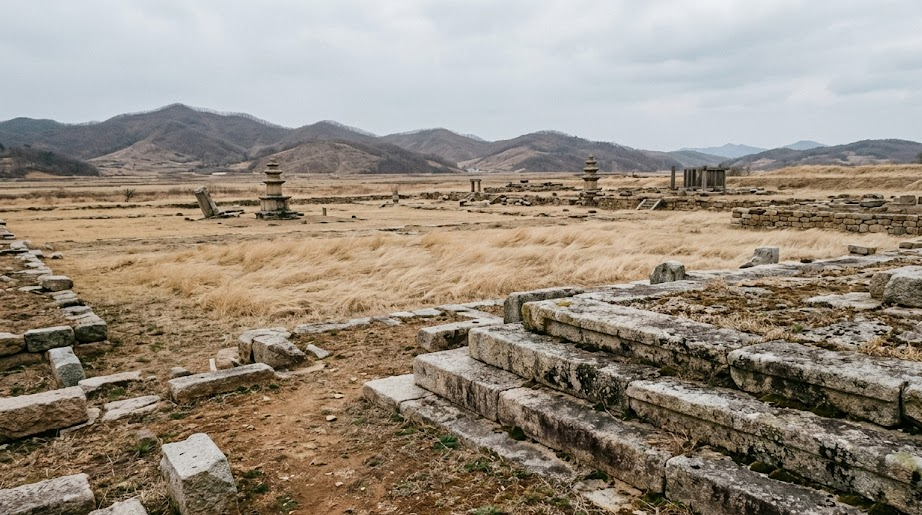
In early spring there are no buildings on the broad grounds at the foot of Cheonbosan Mountain in Yangju. Granite platforms remain in tiers, running on like gray steps, and last year's dried grass rustles in the gaps. Step on the gravel and the smell of damp earth rises from below. If one more name, World Heritage, is attached to this empty place with neither roof nor pillar, what changes?
There are two kinds of dates a city manages. One is the kind that ends. The 31st Busan International Film Festival will run for ten days from October 6 to 15, 2026, centered on the Busan Cinema Center, and the full lineup of invited films will be announced on September 1. After ten days the city returns to its original rhythm, and the success or failure of those ten days is settled within them.
A World Heritage listing belongs to the kind with no ending date. Before it is a decoration, a listing is a contract a city signs. It is a document promising to manage the building heights and roof colors of the buffer zone, down to the materials of the walls, as agreed, and the price of that promise is paid longer by the next generation than by the generation that signed.
The objections are clear, and they are also legitimate. Because of a single old wall an aging house cannot be repaired, and while redevelopment discussions in central Seoul stall for years, the ones paying the cost are the people who live at those addresses. Even if heritage belongs to humanity in common, the restrictions always fall on the roof of a particular individual. Gloss over this imbalance and conservation loses its moral standing and becomes coercion.

It is no surprise, then, that the debate over Heritage Impact Assessment spreads into disputes about regulation. It is a sign that the design of the system is crude, and also a sign that the signing was rushed without the terms of the contract being read out in full. What should be demanded of the administration pursuing a listing is a reading of the contract rather than a congratulatory banner.
What is gained and what is given up, and what compensation and what time limits go to the people who will bear the restrictions, must be disclosed and agreed upon before the listing. Only in a city that has passed through that process do conservation and use stop being opposed to each other. When the rules become predictable, residents can calculate what their house will be like in 20 years, and visitors get a well-managed landscape. That is what it looks like when a contract is properly carried out.
Once ten days pass, a festival can prepare for the next year. An old temple site is different. Once signed, it is hard to reverse, and the price of breaking it hurts far more than the listing. This is why the habit of reading it only as a certificate of honor is dangerous.
You can walk into the empty grounds of the Hoeamsa Temple Site without buying a ticket. Stand on the platforms and the size of the vanished buildings is read through the soles of the feet rather than the eyes, and the sound of the wind sweeping over the dried grass stays a long time. While listening to that sound, it would be better for each person to put a price on the terms under which this empty place will be handed to the next generation. A contract is a contract only when the person signing reads it.